
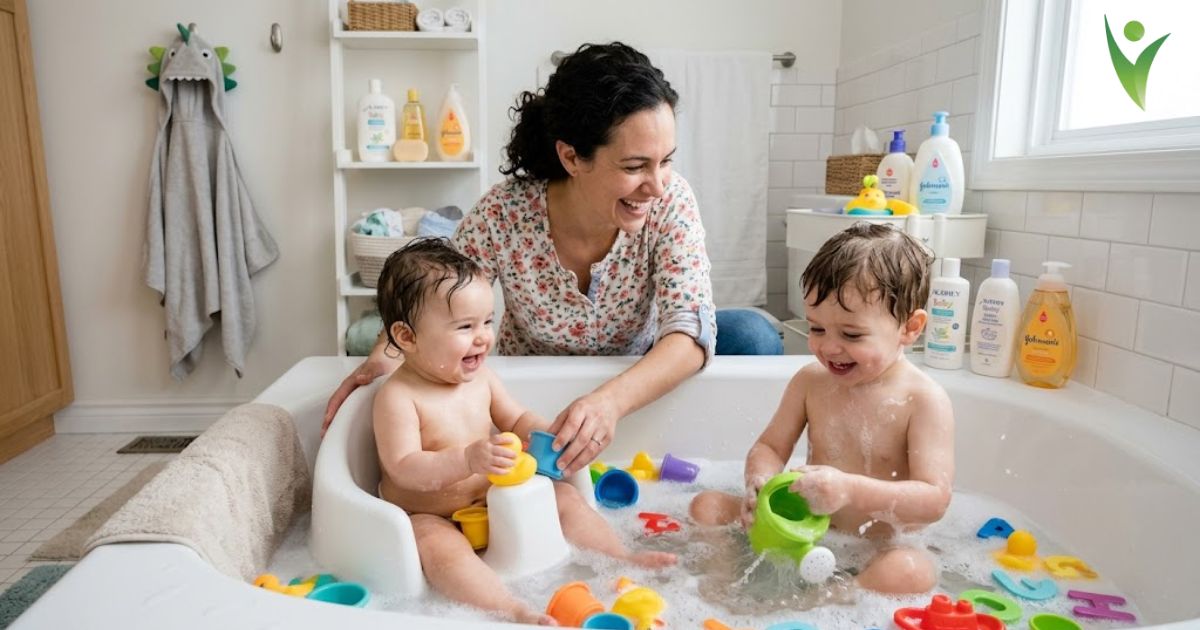
Bath time has a reputation for being one of the trickier parts of the day with a baby or toddler in the house. Some children take to water immediately and seem genuinely delighted by the whole thing. Others scream from the moment their feet touch the surface. Toddlers, meanwhile, can swing between both extremes on the same evening — sometimes within the same bath.
The reassuring truth is that most bath time stress comes down to a handful of fixable things: preparation, water temperature, technique, and having products that actually do what they promise. None of it is complicated once you know what you're doing. Most parents find that once the early nerves settle, bath time becomes one of the better parts of the day.
This guide covers the full picture — from your newborn's very first bath to managing hair washing meltdowns with a toddler — including what temperature the water should be, how to build a routine that helps your child wind down, and which products are worth having.
Quick Answer: How Do You Make Bath Time Less Stressful?
The most common causes of bath time stress, and the fastest fixes:
Water too hot or cold → Aim for 37–38°C. Use a bath thermometer or test with your elbow, not your hand.
No routine → Bath at the same time every evening. When children know what to expect, resistance drops.
Shampoo in the eyes → Switch to a properly tear-free formula. Use a small rinse cup rather than pouring from a jug.
Baby feels unsettled → Support the head and neck throughout. A baby bath support helps in the early weeks.
Toddler resistance → Give small choices — which toy, which towel. Keep the mood light, not rushed.
Too much going on → Soft lighting, calm voice, two or three toys maximum. Less stimulation makes winding down easier
How to Bathe a Newborn: What First-Time Parents Need to Know
There's something about bathing a newborn for the first time that makes even the most confident parent feel nervous. They're small, slippery when wet, and entirely unable to tell you whether they're comfortable. That anxiety is completely normal — but in practice, most newborns settle well into baths once you've done it a handful of times and found your rhythm.
When Can You Give a Baby Their First Bath?
You don't need to rush. The NHS advises waiting until the umbilical cord stump has fallen off — which usually happens within the first two to three weeks — before giving a full bath. Until then, topping and tailing is the right approach. That means cleaning the face, neck folds, hands, and nappy area with cotton wool and warm water, without putting the baby in a tub.
Once the cord stump is gone and the belly button has healed, full baths can begin. Start with two to three times a week rather than daily. Newborns don't need bathing every day, and washing too frequently can strip the natural oils that protect their skin in the early weeks.
Getting the Water Temperature Right
This is the single most important practical step. Water that feels perfectly comfortable to an adult hand can be too hot for a baby's skin — babies feel heat differently and cannot pull away if something is wrong.
The NHS recommends a bath temperature of 37–38°C for babies, which is roughly body temperature. A bath thermometer is the most reliable way to check this and costs very little. If you don't have one yet, test with your elbow rather than your fingers — your elbow is more sensitive and gives a much better read of what the water will feel like on delicate skin.
Always fill with cold water first, then add hot and mix thoroughly before testing. Never add hot water while the baby is already in the bath.
How to Hold a Newborn in the Bath
Confidence in how you hold the baby makes a bigger difference than any technique. Keep one hand supporting the head and neck throughout — the whole time, without exception. Your other hand is free to wash.
Lower the baby in feet first, keeping their head clear of the water at all times. The water only needs to be around 8 to 10cm deep — enough to keep them warm, shallow enough to feel safe. Talk calmly and keep eye contact. Babies pick up on how you're feeling before you've said a word, so steady and calm is the goal even if you don't quite feel it yet.
Which Products Are Right for a Newborn?
For the very first weeks, plain warm water is genuinely all you need. When you do introduce a wash product — most parents start around four to six weeks — keep it as simple as possible.
Look for something fragrance-free, hypoallergenic, and formulated specifically for newborn skin. The is one of the most stripped-back options available — no fragrance, no dye, no parabens, and it covers hair and body in one product which keeps things simple. If you'd prefer a name you already know, has been paediatrician-tested and pH-balanced for use from birth, and the tear-free formula does exactly what it says.
A pea-sized amount is enough for most newborns. Rinse thoroughly, then pat dry — never rub — paying attention to all the little skin folds where moisture tends to sit.
Baby Bath Safety: What Every Parent Should Know
Before getting into routines and products, safety is worth covering clearly — because it underpins everything else.
Never leave a baby or toddler alone in the bath, even for a moment. A young child can drown in a very small amount of water in seconds. If the phone rings or another child needs you — take the baby with you.
Always check the water temperature before the baby goes in. Baby skin burns more quickly than adult skin, and babies cannot move away from water that's too hot.
Fill the bath before the baby gets in. Never add hot water while a child is in the bath.
Keep the water shallow. 8 to 10cm is enough for newborns and young babies.
Use a non-slip surface. Babies and toddlers are slippery when wet. A non-slip bath insert for babies and a rubber mat for the bath floor for toddlers are both worth having.
Check bath toys regularly. Old or cracked bath toys can trap water inside and grow mould. If a toy can't be dried out completely after each bath, it's time to replace it.
How to Wash a Baby's Hair Without the Tears
Hair washing is the part that most parents dread, and the part that most reliably causes a meltdown — for babies and toddlers alike. Water near the face is naturally uncomfortable. For a young child who has no control over what's happening, it can feel alarming.
The good news: in most cases, it's a product and technique problem rather than a permanent fear.Both are fixable.
Use a Proper Tear-Free Shampoo
This makes more difference than most parents expect. A well-made tear-free shampoo uses a formula gentle enough that even if some runs toward the eyes, there's no burning or stinging. Once a child learns that water near their face doesn't hurt, the fear response starts to fade on its own.
is the best-known option in the UK for this and remains one of the most widely used by parents and health visitors alike. It's been tested by eye specialists alongside the tear-free claim, which is worth looking for on any product you use around young children. For babies with dry or flaky scalps, adds a moisturising element while staying just as gentle — a good option if you're dealing with early cradle cap or dryness. Both are available with next-day UK delivery at VitaPoint, and both are worth keeping stocked up rather than running out at bath time.
Browse the full baby shampoo range to find the right option for your baby's skin.
Use a Small Cup, Not a Jug
Pouring water directly from a large jug over a baby's head is the most common reason shampoo and water end up on the face unexpectedly. A small, soft-edged cup gives you far more control over where the water actually goes.
Tilt the head back gently and pour in a slow, steady stream, directing the water away from the face rather than over the top of the head. For toddlers, letting them hold the cup — or pour water onto a toy first — turns the process into something they're part of rather than something being done to them.
When a Toddler Has Already Developed a Fear
If your toddler has reached the point of genuine resistance, forcing it will almost always make the problem worse and drag it out longer.
Start by making water near the face normal during ordinary bath play — let them pour water over themselves from a cup without any washing involved. Give them a small flannel to hold against their forehead if they want to. Praise them specifically when any part of it goes well — "you kept so still when I rinsed the back of your head, that was really good" works much better than general reassurance.
If you haven't already switched to a proper tear-free shampoo, do that first. Often the fear was triggered by a stinging product and removing that cause makes everything else easier. Progress is usually slow for a week or two and then faster once the association starts to shift. It rarely takes as long as parents expect once you're approaching it without pressure.
Building a Bath Time Routine That Works
The single most effective thing you can do for stressful bath times — for any age — is make bath time predictable. When children know what is coming next, they stop resisting the unknown.
The bath itself doesn't change, but their relationship to it does.
What a Good Routine Looks Like
It doesn't need to be complicated. The things that matter most are:
The same time every evening. For most babies and toddlers, somewhere between 6 and 7pm works well — they're tired enough to be ready to wind down but not yet overtired and fractious. Keeping to the same window each evening means their body starts preparing for bath time before it even begins.
The same order every time. Undress, into the bath, wash body, wash hair, out of the bath, dry off, lotion, pyjamas, milk or story. The sequence matters as much as the steps. Each thing cues the next, and children find that predictability genuinely calming rather than boring.
The same products. Smell is one of the most powerful winding-down signals we have. Using the same shampoo at every bath and the same lotion afterwards builds a familiar scent sequence that children start to associate with settling down. Many parents find that using Johnson's Baby Bedtime Lotion specifically in the evening — separate from any daytime moisturiser — helps the sleep association build faster, because the scent becomes part of the signal that the day is ending.
Your own energy. Children are extraordinarily good at reading how you're feeling before you've said anything. If you go into bath time rushed or tense, they feel it and respond to it. Treating bath time as an intentional pause rather than a task to tick off makes a noticeable difference to how it goes.
Making Bath Time Actually Enjoyable for Toddlers
Toddlers are a different challenge to newborns. They're mobile, have opinions, and are fully capable of staging a protest when something doesn't suit them. The approach that tends to work best is giving them just enough agency to feel involved, while keeping the bath moving forward.
Give Small Choices
"Bath time now" is an invitation to argue. "Do you want the blue towel or the yellow one for when you get out?" shifts the whole conversation — suddenly the bath is definitely happening, and your toddler is thinking about which towel they want rather than whether to cooperate. Small choices throughout the process — which toy comes in, which pyjamas go on — create a sense of ownership that makes everything feel less forced.
Keep Toys Simple
A bath full of twenty toys tends to create more chaos than calm. Two or three toys that encourage pouring and filling — basic cups, a small watering can, a couple of floating animals — are better for a child you're trying to settle. Keep these toys specifically for bath time so they stay interesting.
Use Bubble Bath Thoughtfully
A good bubble bath changes the feel of the water, adds a soft sensory element that most toddlers genuinely love, and makes the whole thing feel like a bit of an event. For young children, choose a hypoallergenic, ultra-mild formula free from harsh chemicals — it should foam gently without stripping the skin. The Bath time collection includes gentle bubble bath and body wash options suitable for sensitive skin, all available for next-day delivery if you've run out at short notice.
Sing One Consistent Song During Hair Washing
This sounds too simple to work. It works. Pick one short song — anything — and sing it every single time you rinse the hair. Children find the known endpoint reassuring: they know the song, they know it ends, and they know the uncomfortable bit ends with it. It also keeps you relaxed, which keeps them relaxed. This matters more than any product.
After the Bath: Keeping the Wind-Down Going
What happens in the fifteen minutes after bath time sets the tone for the rest of the evening. Getting this transition right is as important as the bath itself.
Apply Lotion While the Skin Is Still Warm
Baby skin loses moisture quickly, and applying a gentle lotion while the skin is still slightly warm from the bath — not dripping wet, but before it's fully cooled — seals it in far more effectively than applying to cold, dry skin.
is a practical everyday choice that works well for most skin types. For the evening specifically, following up with after the bath — used consistently every night in the same order — helps build that scent-based wind-down signal that many parents find quietly transformative for sleep over the first few months.
If you're also dealing with nappy rash or skin irritation as part of the changing routine, the Baby Changing section has targeted products for both. For health-related questions — supplements, gripe water, vitamin drops — the Baby Health range covers those too.
Go Straight Into the Next Quiet Step
After lotion, straight into pyjamas. Then milk, or a story, or both — in the same order every time. Every few minutes of loud play or screen time between bath and bed works against everything the bath just did. Keep the energy moving down, not back up.
How Often Should You Bathe a Baby?
This comes up constantly among UK parents, and the answer is simpler than most people expect.
Newborns (0–3 months): Two to three times a week is plenty. More frequent bathing can dry out a newborn's skin before the natural protective barrier is fully established.
Babies (3–12 months): Three times a week remains fine, though daily bathing is safe if you're using a gentle, daily-use formula. Once weaning starts and food regularly ends up in hair and ears, daily baths tend to become more practical anyway.
Toddlers (1–3 years): Most toddlers do well with a daily bath — it's useful for hygiene and works well as a consistent sleep signal. Daily bathing at this age is perfectly safe with the right products.
The key at any age is matching your wash frequency with a formula designed for it. Johnson's and Dove Baby ranges are both made for daily use from birth, which means you don't need to worry about over-washing even if you bathe every day.
If you haven't already, it's worth reading our full guide to the best baby shampoos in the UK — it covers every option by skin type, age, and budget, and it takes the guesswork out of what to buy.
Frequently Asked Questions
What temperature should a baby's bath be? The NHS recommends 37–38°C — about body temperature. A bath thermometer is the most reliable way to check. If you don't have one, test with your elbow rather than your fingers. Your elbow is more temperature-sensitive and gives a much better sense of what the water will feel like on a baby's skin.
When can you give a newborn their first bath? Once the umbilical cord stump has fallen off and healed, which usually happens within two to three weeks of birth. Before that, the NHS recommends topping and tailing — cleaning the face, neck, hands, and nappy area with cotton wool and warm water, without submerging the baby.
How do I stop shampoo getting in my baby's eyes? Switch to a properly formulated tear-free shampoo and rinse with a small cup rather than pouring from a large jug. Tilt the head back gently during rinsing to direct water away from the face. Technique matters even with a tear-free product — a controlled pour from a cup is far less likely to run toward the eyes than tipping a full jug. How often should I bathe my newborn? Two to three times a week is enough. Daily bathing isn't necessary and can dry out a newborn's delicate skin. As they get older and more mobile — particularly once weaning starts — more frequent bathing becomes practical.
What is the best baby shampoo for sensitive skin? For sensitive or reactive skin, look for a hypoallergenic, fragrance-free formula that has been dermatologist-tested. Baby Dove Calming Moisture and Sanex Zero Baby are both made specifically for sensitive skin. Johnson's No Tears is paediatrician-tested and widely used across all skin types from birth. For a full breakdown by skin type and budget, see our guide to the best baby shampoos in the UK.
My toddler hates having their hair washed. What can I do? Start by switching to a genuinely tear-free shampoo if you haven't already — the fear is often triggered by a product that stings, and removing that cause fixes most of the problem. Let your toddler pour water over themselves during play without any washing involved, so water near the face stops feeling threatening. Give them a flannel to hold against their forehead for control. Pick one consistent song to sing during rinsing so they know exactly when it ends. Be patient — it usually shifts faster than parents expect once the pressure is removed.
How do I build a bath time routine that helps my baby sleep? Consistency matters more than any individual product or technique. Bath at the same time each evening, followed by the same steps in the same order — lotion, pyjamas, milk or story — builds a reliable signal for the brain that sleep is coming. Using a scented bedtime lotion after every bath strengthens the association over time, so the smell alone starts to trigger the winding-down response.
Is bubble bath safe for babies? Yes, if you choose the right product. Look for hypoallergenic bubble bath formulated specifically for babies — free from sulphates, parabens, and alcohol. Avoid adult products, which typically contain ingredients too strong for baby skin. For newborns under three months, plain warm water is still the safest choice.
What should I do if my baby cries during every bath? Some crying in the early weeks is normal — baths are unfamiliar and babies often cry when they feel cold or unsupported. Check the water temperature, make sure you're holding the baby securely, and keep baths short to start with. Talk or sing calmly throughout. If crying carries on consistently past the first month, try a different time of day — some babies respond much better to morning baths when they're less tired.
How do I care for my baby's skin after bathing? Pat the skin dry rather than rubbing, and pay close attention to all the skin folds where moisture collects. Apply a gentle, hypoallergenic baby lotion while the skin is still warm from the bath to lock in moisture before it evaporates. For evening baths, a dedicated bedtime lotion used consistently after every bath helps build a sleep associated scent cue that many parents find makes a real difference to their baby's settling.
The Bottom Line
Bath time doesn't have to be something you dread. The stress that most parents — and most babies and toddlers — experience at bath time almost always comes back to the same things: the wrong temperature, no real routine, products that aren't quite right, and not feeling confident in the holding or technique.
Sort those four things out and it changes. Bath time becomes a genuine moment of calm in the evening, a chance to slow down, connect with your child, and ease the whole household toward sleep. That's worth putting a bit of thought into.
Everything you need to build a calm, consistent bath time routine is in VitaPoint's Bath time collection — gentle , hypoallergenic bubble bath, baby lotions, and post-bath essentials from brands UK parents already trust. All in stock, all at competitive prices, with next day delivery on orders placed before 5pm.
For specific concerns about your baby's skin, allergies, or development, always speak to your GP or health visitor.
The reassuring truth is that most bath time stress comes down to a handful of fixable things: preparation, water temperature, technique, and having products that actually do what they promise. None of it is complicated once you know what you're doing. Most parents find that once the early nerves settle, bath time becomes one of the better parts of the day.
This guide covers the full picture — from your newborn's very first bath to managing hair washing meltdowns with a toddler — including what temperature the water should be, how to build a routine that helps your child wind down, and which products are worth having.
Quick Answer: How Do You Make Bath Time Less Stressful?
The most common causes of bath time stress, and the fastest fixes:
Water too hot or cold → Aim for 37–38°C. Use a bath thermometer or test with your elbow, not your hand.
No routine → Bath at the same time every evening. When children know what to expect, resistance drops.
Shampoo in the eyes → Switch to a properly tear-free formula. Use a small rinse cup rather than pouring from a jug.
Baby feels unsettled → Support the head and neck throughout. A baby bath support helps in the early weeks.
Toddler resistance → Give small choices — which toy, which towel. Keep the mood light, not rushed.
Too much going on → Soft lighting, calm voice, two or three toys maximum. Less stimulation makes winding down easier
How to Bathe a Newborn: What First-Time Parents Need to Know
There's something about bathing a newborn for the first time that makes even the most confident parent feel nervous. They're small, slippery when wet, and entirely unable to tell you whether they're comfortable. That anxiety is completely normal — but in practice, most newborns settle well into baths once you've done it a handful of times and found your rhythm.
When Can You Give a Baby Their First Bath?
You don't need to rush. The NHS advises waiting until the umbilical cord stump has fallen off — which usually happens within the first two to three weeks — before giving a full bath. Until then, topping and tailing is the right approach. That means cleaning the face, neck folds, hands, and nappy area with cotton wool and warm water, without putting the baby in a tub.
Once the cord stump is gone and the belly button has healed, full baths can begin. Start with two to three times a week rather than daily. Newborns don't need bathing every day, and washing too frequently can strip the natural oils that protect their skin in the early weeks.
Getting the Water Temperature Right
This is the single most important practical step. Water that feels perfectly comfortable to an adult hand can be too hot for a baby's skin — babies feel heat differently and cannot pull away if something is wrong.
The NHS recommends a bath temperature of 37–38°C for babies, which is roughly body temperature. A bath thermometer is the most reliable way to check this and costs very little. If you don't have one yet, test with your elbow rather than your fingers — your elbow is more sensitive and gives a much better read of what the water will feel like on delicate skin.
Always fill with cold water first, then add hot and mix thoroughly before testing. Never add hot water while the baby is already in the bath.
How to Hold a Newborn in the Bath
Confidence in how you hold the baby makes a bigger difference than any technique. Keep one hand supporting the head and neck throughout — the whole time, without exception. Your other hand is free to wash.
Lower the baby in feet first, keeping their head clear of the water at all times. The water only needs to be around 8 to 10cm deep — enough to keep them warm, shallow enough to feel safe. Talk calmly and keep eye contact. Babies pick up on how you're feeling before you've said a word, so steady and calm is the goal even if you don't quite feel it yet.
Which Products Are Right for a Newborn?
For the very first weeks, plain warm water is genuinely all you need. When you do introduce a wash product — most parents start around four to six weeks — keep it as simple as possible.
Look for something fragrance-free, hypoallergenic, and formulated specifically for newborn skin. The is one of the most stripped-back options available — no fragrance, no dye, no parabens, and it covers hair and body in one product which keeps things simple. If you'd prefer a name you already know, has been paediatrician-tested and pH-balanced for use from birth, and the tear-free formula does exactly what it says.
A pea-sized amount is enough for most newborns. Rinse thoroughly, then pat dry — never rub — paying attention to all the little skin folds where moisture tends to sit.
Baby Bath Safety: What Every Parent Should Know
Before getting into routines and products, safety is worth covering clearly — because it underpins everything else.
Never leave a baby or toddler alone in the bath, even for a moment. A young child can drown in a very small amount of water in seconds. If the phone rings or another child needs you — take the baby with you.
Always check the water temperature before the baby goes in. Baby skin burns more quickly than adult skin, and babies cannot move away from water that's too hot.
Fill the bath before the baby gets in. Never add hot water while a child is in the bath.
Keep the water shallow. 8 to 10cm is enough for newborns and young babies.
Use a non-slip surface. Babies and toddlers are slippery when wet. A non-slip bath insert for babies and a rubber mat for the bath floor for toddlers are both worth having.
Check bath toys regularly. Old or cracked bath toys can trap water inside and grow mould. If a toy can't be dried out completely after each bath, it's time to replace it.
How to Wash a Baby's Hair Without the Tears
Hair washing is the part that most parents dread, and the part that most reliably causes a meltdown — for babies and toddlers alike. Water near the face is naturally uncomfortable. For a young child who has no control over what's happening, it can feel alarming.
The good news: in most cases, it's a product and technique problem rather than a permanent fear.Both are fixable.
Use a Proper Tear-Free Shampoo
This makes more difference than most parents expect. A well-made tear-free shampoo uses a formula gentle enough that even if some runs toward the eyes, there's no burning or stinging. Once a child learns that water near their face doesn't hurt, the fear response starts to fade on its own.
is the best-known option in the UK for this and remains one of the most widely used by parents and health visitors alike. It's been tested by eye specialists alongside the tear-free claim, which is worth looking for on any product you use around young children. For babies with dry or flaky scalps, adds a moisturising element while staying just as gentle — a good option if you're dealing with early cradle cap or dryness. Both are available with next-day UK delivery at VitaPoint, and both are worth keeping stocked up rather than running out at bath time.
Browse the full baby shampoo range to find the right option for your baby's skin.
Use a Small Cup, Not a Jug
Pouring water directly from a large jug over a baby's head is the most common reason shampoo and water end up on the face unexpectedly. A small, soft-edged cup gives you far more control over where the water actually goes.
Tilt the head back gently and pour in a slow, steady stream, directing the water away from the face rather than over the top of the head. For toddlers, letting them hold the cup — or pour water onto a toy first — turns the process into something they're part of rather than something being done to them.
When a Toddler Has Already Developed a Fear
If your toddler has reached the point of genuine resistance, forcing it will almost always make the problem worse and drag it out longer.
Start by making water near the face normal during ordinary bath play — let them pour water over themselves from a cup without any washing involved. Give them a small flannel to hold against their forehead if they want to. Praise them specifically when any part of it goes well — "you kept so still when I rinsed the back of your head, that was really good" works much better than general reassurance.
If you haven't already switched to a proper tear-free shampoo, do that first. Often the fear was triggered by a stinging product and removing that cause makes everything else easier. Progress is usually slow for a week or two and then faster once the association starts to shift. It rarely takes as long as parents expect once you're approaching it without pressure.
Building a Bath Time Routine That Works
The single most effective thing you can do for stressful bath times — for any age — is make bath time predictable. When children know what is coming next, they stop resisting the unknown.
The bath itself doesn't change, but their relationship to it does.
What a Good Routine Looks Like
It doesn't need to be complicated. The things that matter most are:
The same time every evening. For most babies and toddlers, somewhere between 6 and 7pm works well — they're tired enough to be ready to wind down but not yet overtired and fractious. Keeping to the same window each evening means their body starts preparing for bath time before it even begins.
The same order every time. Undress, into the bath, wash body, wash hair, out of the bath, dry off, lotion, pyjamas, milk or story. The sequence matters as much as the steps. Each thing cues the next, and children find that predictability genuinely calming rather than boring.
The same products. Smell is one of the most powerful winding-down signals we have. Using the same shampoo at every bath and the same lotion afterwards builds a familiar scent sequence that children start to associate with settling down. Many parents find that using Johnson's Baby Bedtime Lotion specifically in the evening — separate from any daytime moisturiser — helps the sleep association build faster, because the scent becomes part of the signal that the day is ending.
Your own energy. Children are extraordinarily good at reading how you're feeling before you've said anything. If you go into bath time rushed or tense, they feel it and respond to it. Treating bath time as an intentional pause rather than a task to tick off makes a noticeable difference to how it goes.
Making Bath Time Actually Enjoyable for Toddlers
Toddlers are a different challenge to newborns. They're mobile, have opinions, and are fully capable of staging a protest when something doesn't suit them. The approach that tends to work best is giving them just enough agency to feel involved, while keeping the bath moving forward.
Give Small Choices
"Bath time now" is an invitation to argue. "Do you want the blue towel or the yellow one for when you get out?" shifts the whole conversation — suddenly the bath is definitely happening, and your toddler is thinking about which towel they want rather than whether to cooperate. Small choices throughout the process — which toy comes in, which pyjamas go on — create a sense of ownership that makes everything feel less forced.
Keep Toys Simple
A bath full of twenty toys tends to create more chaos than calm. Two or three toys that encourage pouring and filling — basic cups, a small watering can, a couple of floating animals — are better for a child you're trying to settle. Keep these toys specifically for bath time so they stay interesting.
Use Bubble Bath Thoughtfully
A good bubble bath changes the feel of the water, adds a soft sensory element that most toddlers genuinely love, and makes the whole thing feel like a bit of an event. For young children, choose a hypoallergenic, ultra-mild formula free from harsh chemicals — it should foam gently without stripping the skin. The Bath time collection includes gentle bubble bath and body wash options suitable for sensitive skin, all available for next-day delivery if you've run out at short notice.
Sing One Consistent Song During Hair Washing
This sounds too simple to work. It works. Pick one short song — anything — and sing it every single time you rinse the hair. Children find the known endpoint reassuring: they know the song, they know it ends, and they know the uncomfortable bit ends with it. It also keeps you relaxed, which keeps them relaxed. This matters more than any product.
After the Bath: Keeping the Wind-Down Going
What happens in the fifteen minutes after bath time sets the tone for the rest of the evening. Getting this transition right is as important as the bath itself.
Apply Lotion While the Skin Is Still Warm
Baby skin loses moisture quickly, and applying a gentle lotion while the skin is still slightly warm from the bath — not dripping wet, but before it's fully cooled — seals it in far more effectively than applying to cold, dry skin.
is a practical everyday choice that works well for most skin types. For the evening specifically, following up with after the bath — used consistently every night in the same order — helps build that scent-based wind-down signal that many parents find quietly transformative for sleep over the first few months.
If you're also dealing with nappy rash or skin irritation as part of the changing routine, the Baby Changing section has targeted products for both. For health-related questions — supplements, gripe water, vitamin drops — the Baby Health range covers those too.
Go Straight Into the Next Quiet Step
After lotion, straight into pyjamas. Then milk, or a story, or both — in the same order every time. Every few minutes of loud play or screen time between bath and bed works against everything the bath just did. Keep the energy moving down, not back up.
How Often Should You Bathe a Baby?
This comes up constantly among UK parents, and the answer is simpler than most people expect.
Newborns (0–3 months): Two to three times a week is plenty. More frequent bathing can dry out a newborn's skin before the natural protective barrier is fully established.
Babies (3–12 months): Three times a week remains fine, though daily bathing is safe if you're using a gentle, daily-use formula. Once weaning starts and food regularly ends up in hair and ears, daily baths tend to become more practical anyway.
Toddlers (1–3 years): Most toddlers do well with a daily bath — it's useful for hygiene and works well as a consistent sleep signal. Daily bathing at this age is perfectly safe with the right products.
The key at any age is matching your wash frequency with a formula designed for it. Johnson's and Dove Baby ranges are both made for daily use from birth, which means you don't need to worry about over-washing even if you bathe every day.
If you haven't already, it's worth reading our full guide to the best baby shampoos in the UK — it covers every option by skin type, age, and budget, and it takes the guesswork out of what to buy.
Frequently Asked Questions
What temperature should a baby's bath be? The NHS recommends 37–38°C — about body temperature. A bath thermometer is the most reliable way to check. If you don't have one, test with your elbow rather than your fingers. Your elbow is more temperature-sensitive and gives a much better sense of what the water will feel like on a baby's skin.
When can you give a newborn their first bath? Once the umbilical cord stump has fallen off and healed, which usually happens within two to three weeks of birth. Before that, the NHS recommends topping and tailing — cleaning the face, neck, hands, and nappy area with cotton wool and warm water, without submerging the baby.
How do I stop shampoo getting in my baby's eyes? Switch to a properly formulated tear-free shampoo and rinse with a small cup rather than pouring from a large jug. Tilt the head back gently during rinsing to direct water away from the face. Technique matters even with a tear-free product — a controlled pour from a cup is far less likely to run toward the eyes than tipping a full jug. How often should I bathe my newborn? Two to three times a week is enough. Daily bathing isn't necessary and can dry out a newborn's delicate skin. As they get older and more mobile — particularly once weaning starts — more frequent bathing becomes practical.
What is the best baby shampoo for sensitive skin? For sensitive or reactive skin, look for a hypoallergenic, fragrance-free formula that has been dermatologist-tested. Baby Dove Calming Moisture and Sanex Zero Baby are both made specifically for sensitive skin. Johnson's No Tears is paediatrician-tested and widely used across all skin types from birth. For a full breakdown by skin type and budget, see our guide to the best baby shampoos in the UK.
My toddler hates having their hair washed. What can I do? Start by switching to a genuinely tear-free shampoo if you haven't already — the fear is often triggered by a product that stings, and removing that cause fixes most of the problem. Let your toddler pour water over themselves during play without any washing involved, so water near the face stops feeling threatening. Give them a flannel to hold against their forehead for control. Pick one consistent song to sing during rinsing so they know exactly when it ends. Be patient — it usually shifts faster than parents expect once the pressure is removed.
How do I build a bath time routine that helps my baby sleep? Consistency matters more than any individual product or technique. Bath at the same time each evening, followed by the same steps in the same order — lotion, pyjamas, milk or story — builds a reliable signal for the brain that sleep is coming. Using a scented bedtime lotion after every bath strengthens the association over time, so the smell alone starts to trigger the winding-down response.
Is bubble bath safe for babies? Yes, if you choose the right product. Look for hypoallergenic bubble bath formulated specifically for babies — free from sulphates, parabens, and alcohol. Avoid adult products, which typically contain ingredients too strong for baby skin. For newborns under three months, plain warm water is still the safest choice.
What should I do if my baby cries during every bath? Some crying in the early weeks is normal — baths are unfamiliar and babies often cry when they feel cold or unsupported. Check the water temperature, make sure you're holding the baby securely, and keep baths short to start with. Talk or sing calmly throughout. If crying carries on consistently past the first month, try a different time of day — some babies respond much better to morning baths when they're less tired.
How do I care for my baby's skin after bathing? Pat the skin dry rather than rubbing, and pay close attention to all the skin folds where moisture collects. Apply a gentle, hypoallergenic baby lotion while the skin is still warm from the bath to lock in moisture before it evaporates. For evening baths, a dedicated bedtime lotion used consistently after every bath helps build a sleep associated scent cue that many parents find makes a real difference to their baby's settling.
The Bottom Line
Bath time doesn't have to be something you dread. The stress that most parents — and most babies and toddlers — experience at bath time almost always comes back to the same things: the wrong temperature, no real routine, products that aren't quite right, and not feeling confident in the holding or technique.
Sort those four things out and it changes. Bath time becomes a genuine moment of calm in the evening, a chance to slow down, connect with your child, and ease the whole household toward sleep. That's worth putting a bit of thought into.
Everything you need to build a calm, consistent bath time routine is in VitaPoint's Bath time collection — gentle , hypoallergenic bubble bath, baby lotions, and post-bath essentials from brands UK parents already trust. All in stock, all at competitive prices, with next day delivery on orders placed before 5pm.
For specific concerns about your baby's skin, allergies, or development, always speak to your GP or health visitor.